Our Heritage
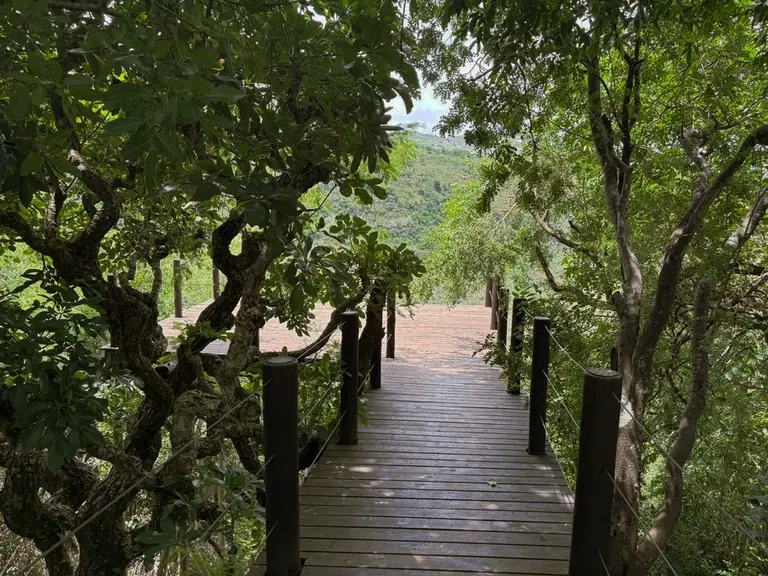
Theo Owen opened the park in 1977 so people could meet life-size prehistoric figures in the forest beside Sudwala Caves.

From caves to forest trail
The Owen family’s connection to Sudwala began with the caves. In 1965 Theo’s father, known as P.R. Owen, bought the farm that contains them. He helped open the caves to visitors and built the road up to the site.
In the mid-1970s, visitors to the Rand Easter Show saw some of South African sculptor Jan van Zijl’s life-size prehistoric figures. Theo saw a way to give those figures a permanent home on the family’s hillside. Set among its trees and rocks, the sculptures could emerge from the landscape one at a time.
From research to sculpture
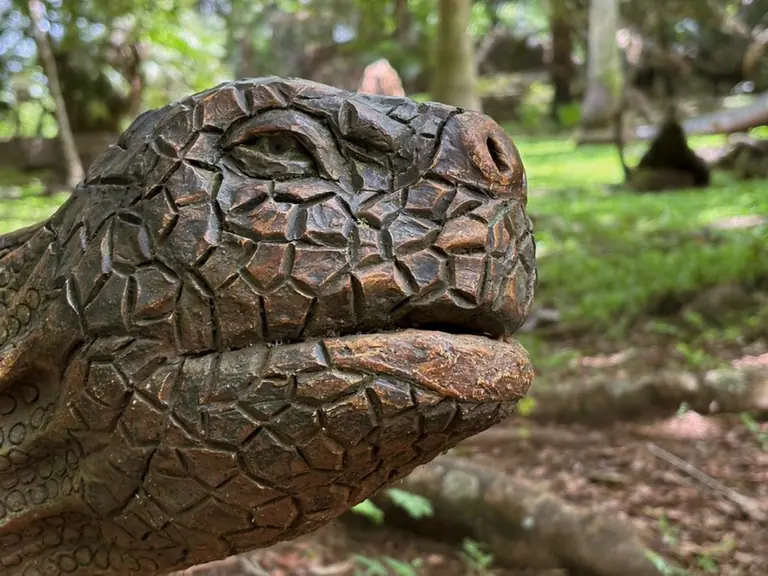
Van Zijl worked from the palaeontological research available at the time. He considered how a skeleton carried its weight, where its muscles sat and how a creature might stand or move. You can see those decisions in the angles of jaws and legs, and his hand in details as small as the scales around an eye.
He made many of the park’s original figures. Other artists have contributed sculptures of their own over the years.
Van Zijl’s coin designs
His work also appeared on South African coins. He designed the springbok on an earlier silver R1 and the black wildebeest on the bronze 2c coin.
How the park took shape
The Owen family buys the property
P.R. Owen buys the farm that contains Sudwala Caves.
Mid-1970s
Figures go on show
Van Zijl’s prehistoric figures appear at the Rand Easter Show.
Theo opens the park
Life-size figures take their places along the forest trail.
Today
Philip carries it forward
Visitors follow a trail with more than 30 sculptures.
The park today
Philip Owen took over the park from his father, Theo, and owns it today. Families, school groups and travellers still follow the trail that brought van Zijl’s sculptures into the forest.
From the woodland floor to the surface of the pond, the setting still gives each sculpture its scale. Alongside the original figures, the trail takes in extinct mammals and two enclosures with three live crocodiles.